Confocal Microscopy Application Guide
Basics of Confocal Microscopy
Confocal microscopes use a unique arrangement of apertures to produce an image at the detector that is a thin optical slice or section of the specimen. A sample that might be several millimeters thick can be reduced to a focal field of less than one micron in the z-axis, for instance.
The field of illumination in the confocal is restricted by an aperture, typically called the pinhole. The field of view is also restricted by a pinhole, which is placed at the image plane conjugate to the illumination point and the first aperture. This ‘confocal’ configuration results in less out-of-focus light reaching the detector, which increases the signal-to-noise ratio by greatly reducing the imaging volume.
Modern scanning confocal microscopes use a laser, or combination of lasers, for the illumination source. The scan is done by carefully controlled galvanometer mirrors that move the diffraction limited spot of illumination across the field in a raster motion, similar to a CRT television set, controlled by the computer. The scattered, reflected fluorescence light from the sample is sent to a photomultiplier tube (PMT), while the image is formed onto a computer screen one point (picture element, or pixel) at a time.
One of the most important features of confocal microscopy is its ability to optically section specimens. Confocal's optical sectioning characteristic allows users to image thick tissue without the skill of microtomy and to image living cells, tissues, and organisms with very high resolution. This optical sectioning ability also means that the individual slices/images can be saved in the computer and then reconstructed to show the three dimensional portrait of the sample.
This system places some unusual requirements upon the optical elements used for fluorescent imaging. A major misconception is that the laser light output from a specific laser produces only one wavelength. In reality, almost all lasers produce harmonics and/or scatter of other wavelengths. While these secondary lines may be very weak in intensity compared to the primary line, they can, nonetheless, greatly reduce the signal-to-noise ratio. If the fluorescence emission happens to be in the same wavelength region as the harmonic (or other noise from the laser), the fluorescent signal may be completely masked, rendering it invisible.
Filter Requirements for Confocal Microscopy
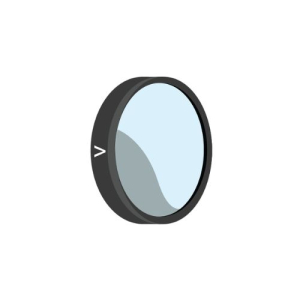
Excitation Filters
The first optical element in the excitation path is typically a laser clean-up filter, which ensures that only the desired laser line reaches the specimen. These filters must provide high transmission at the laser wavelength while blocking unwanted spectral components across a wide range (often from the UV through the near-IR). Clean-up filters are typically narrow bandpass filters (~10 nm FWHM), though slightly wider designs (20–25 nm) may be used for diode lasers due to wavelength drift.
Because of the collimated and coherent nature of laser light, clean-up filters must also meet strict optical quality requirements. These include low wavefront distortion and minimal wedge to prevent beam deviation and misalignment.
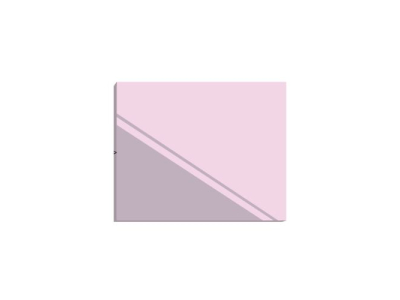
Dichroic Mirrors
Dichroic beamsplitters in confocal systems are selected for high flatness to maintain beam quality and minimize wavefront distortion. In some cases, thicker substrates are used to meet transmitted wavefront requirements. These optics must also withstand high laser power without degradation.
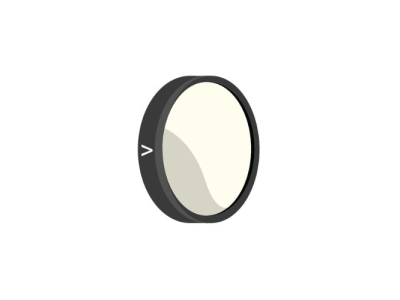
Emission Filters
Emission filters in confocal systems are primarily responsible for blocking excitation light while transmitting fluorescence. Because laser lines can be extremely intense, blocking requirements may exceed OD8 at specific wavelengths. Although the spectral range of blocking is often narrower than in widefield fluorescence, the required attenuation at the laser wavelength is significantly higher.
*Note About Filter Sets for Confocal Microscopy
Filter sets for confocal systems are typically designed around the available laser lines rather than the peak excitation of the fluorochrome. As a result, fluorophore selection is often constrained by the laser wavelengths available. Polychroic beamsplitters may be used to accommodate multiple laser lines in multi-color imaging systems.
Additional Resources
Still Have Questions?
Our applications team works with confocal setups across most major commercial platforms. Tell us your instrument and fluorochromes and we'll point you in the right direction.